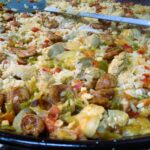

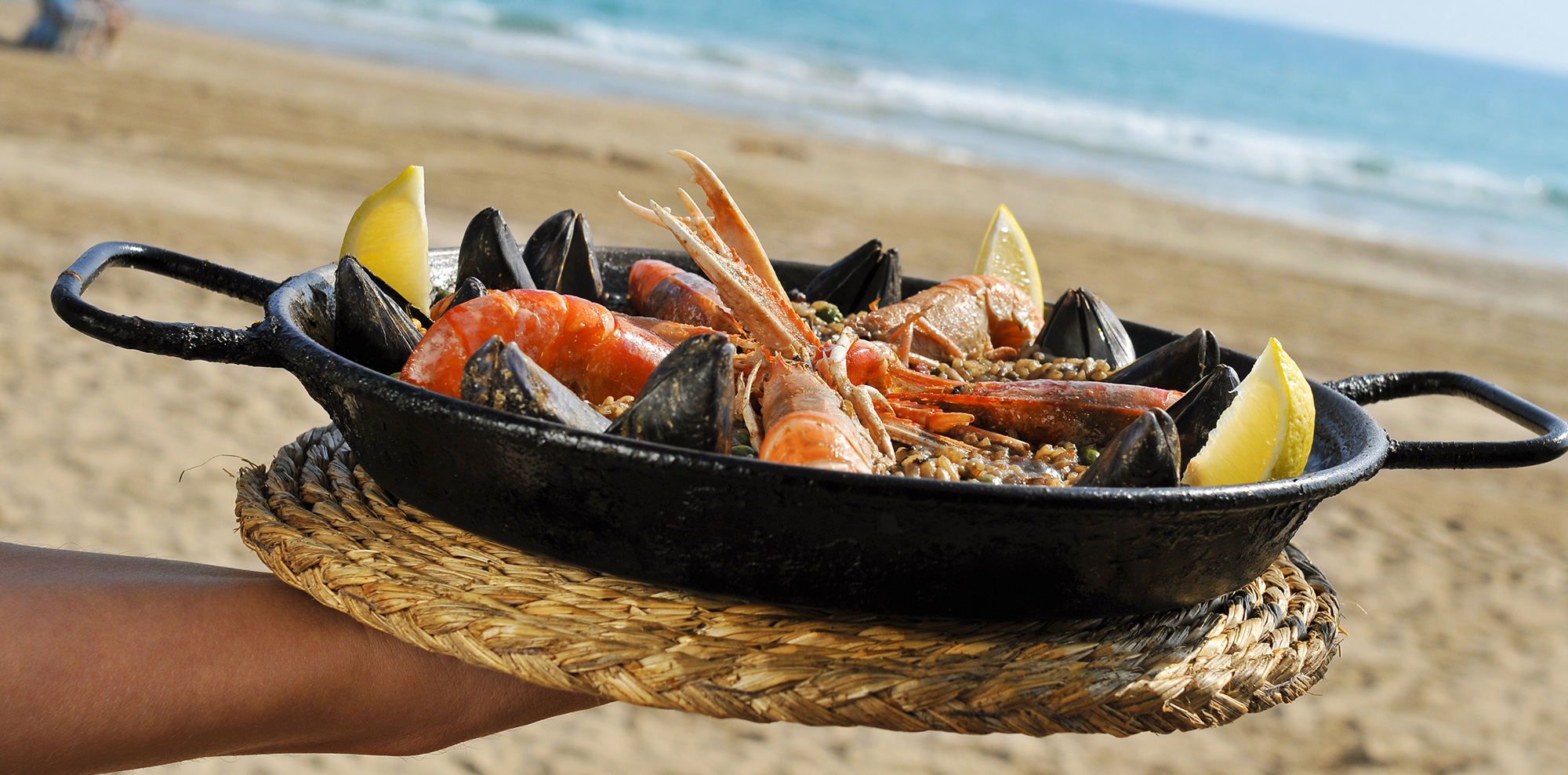
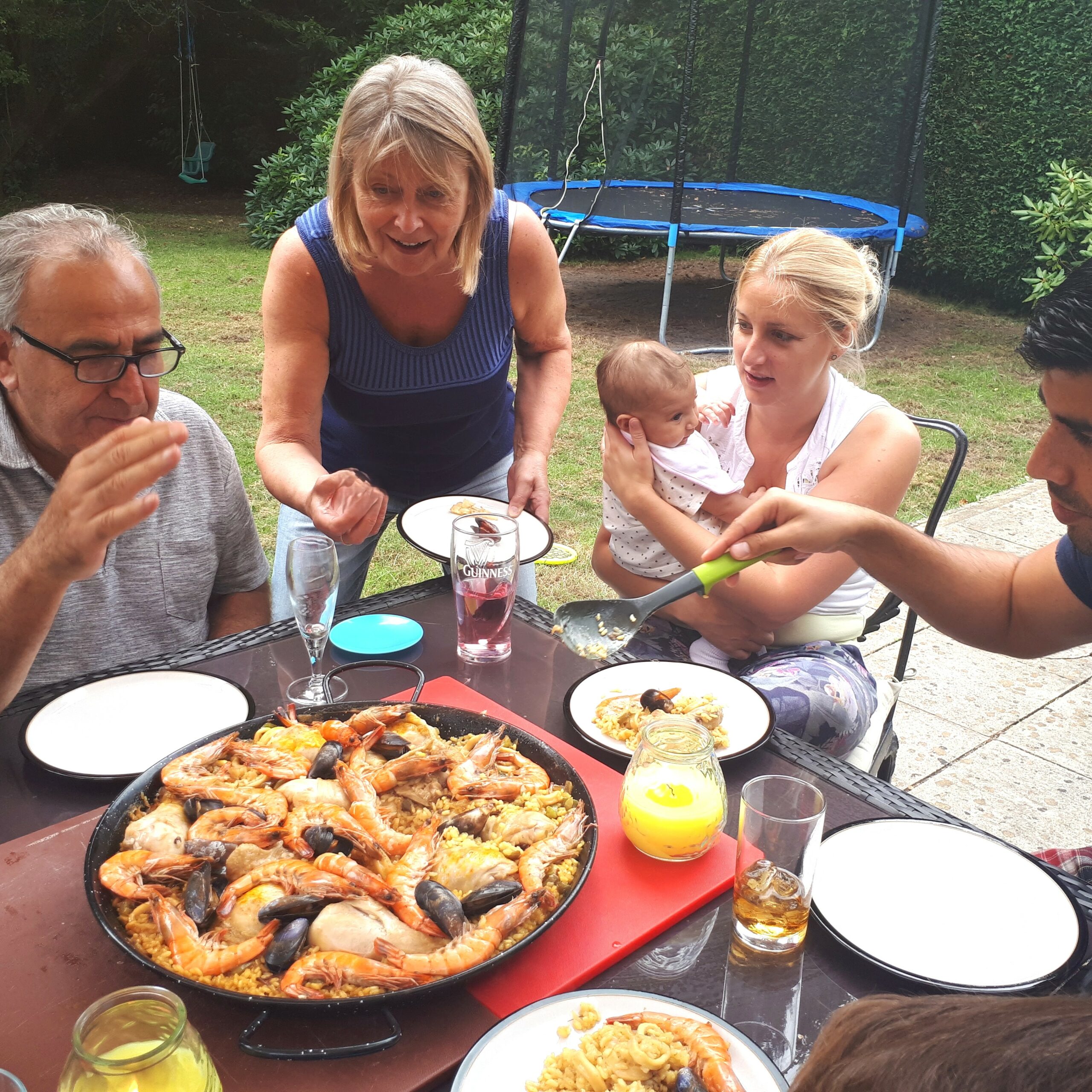
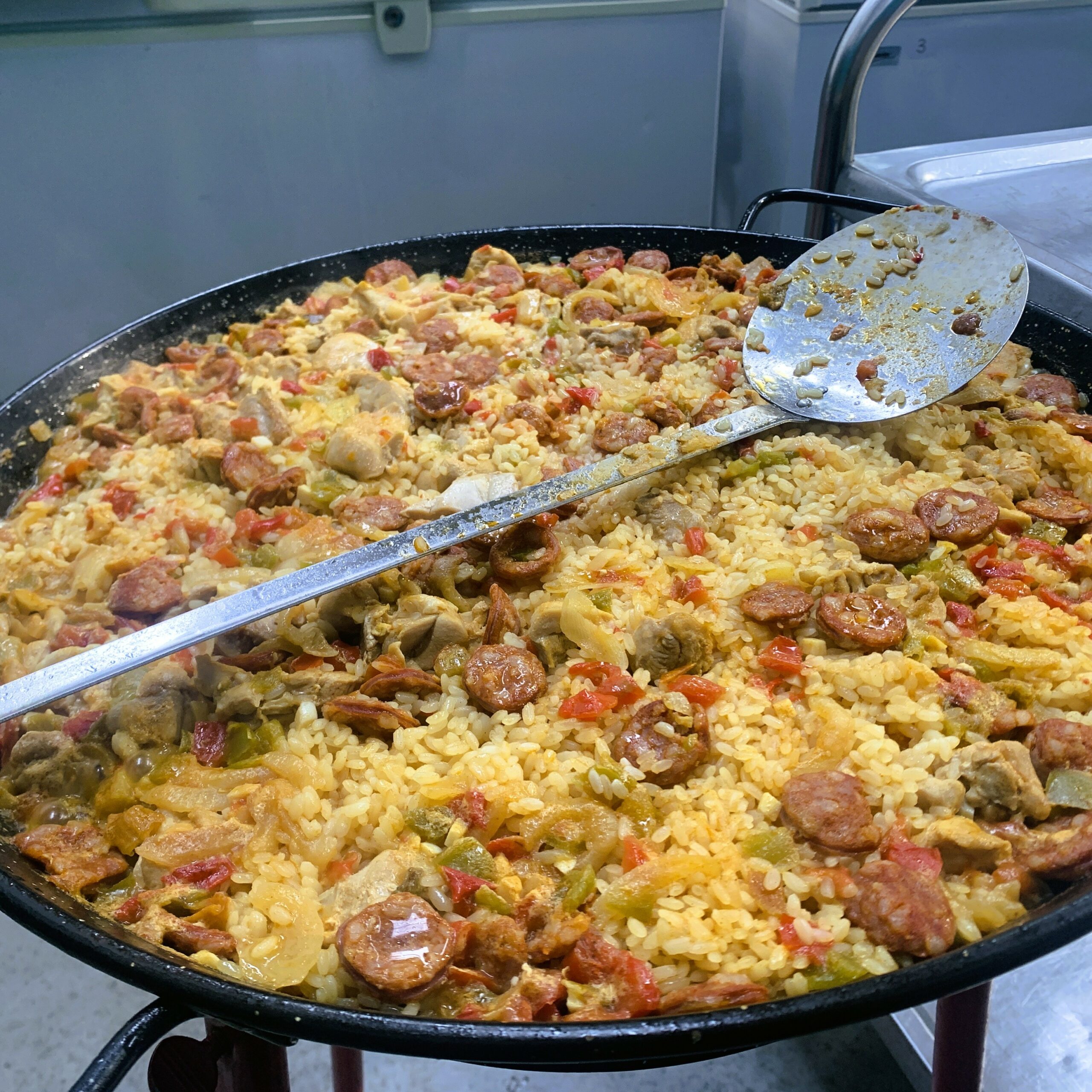
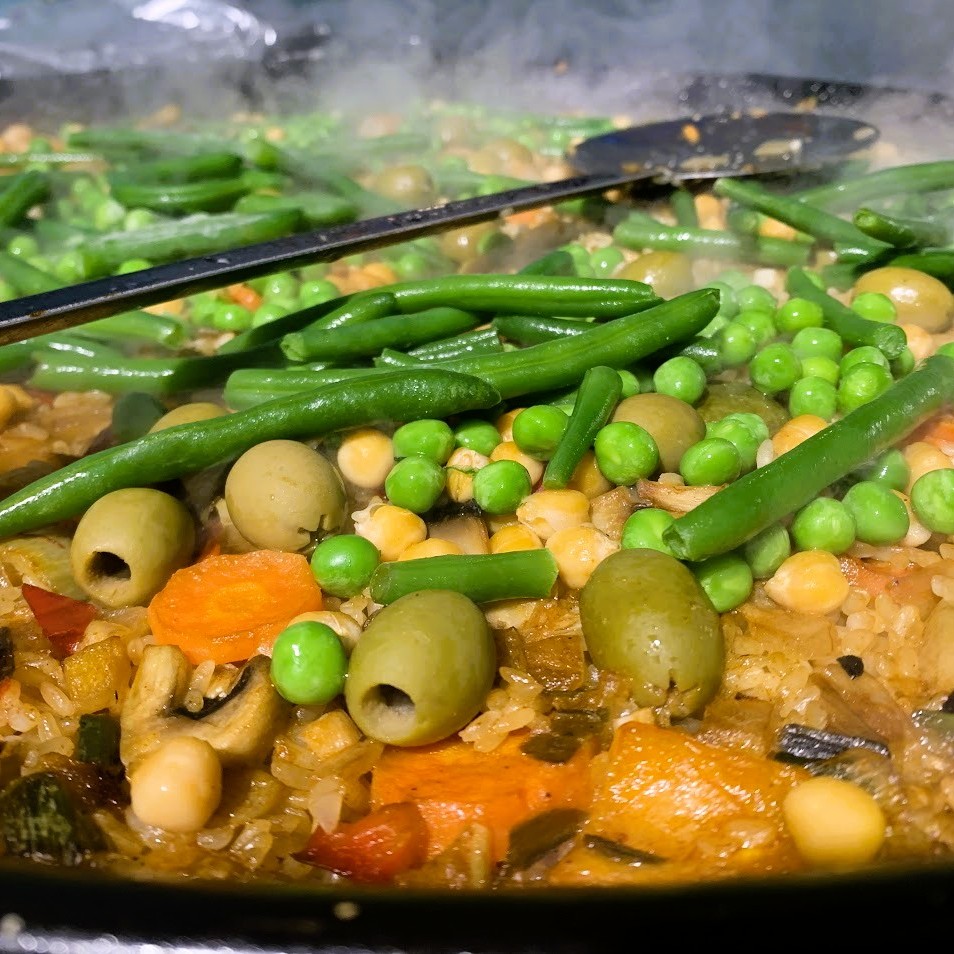
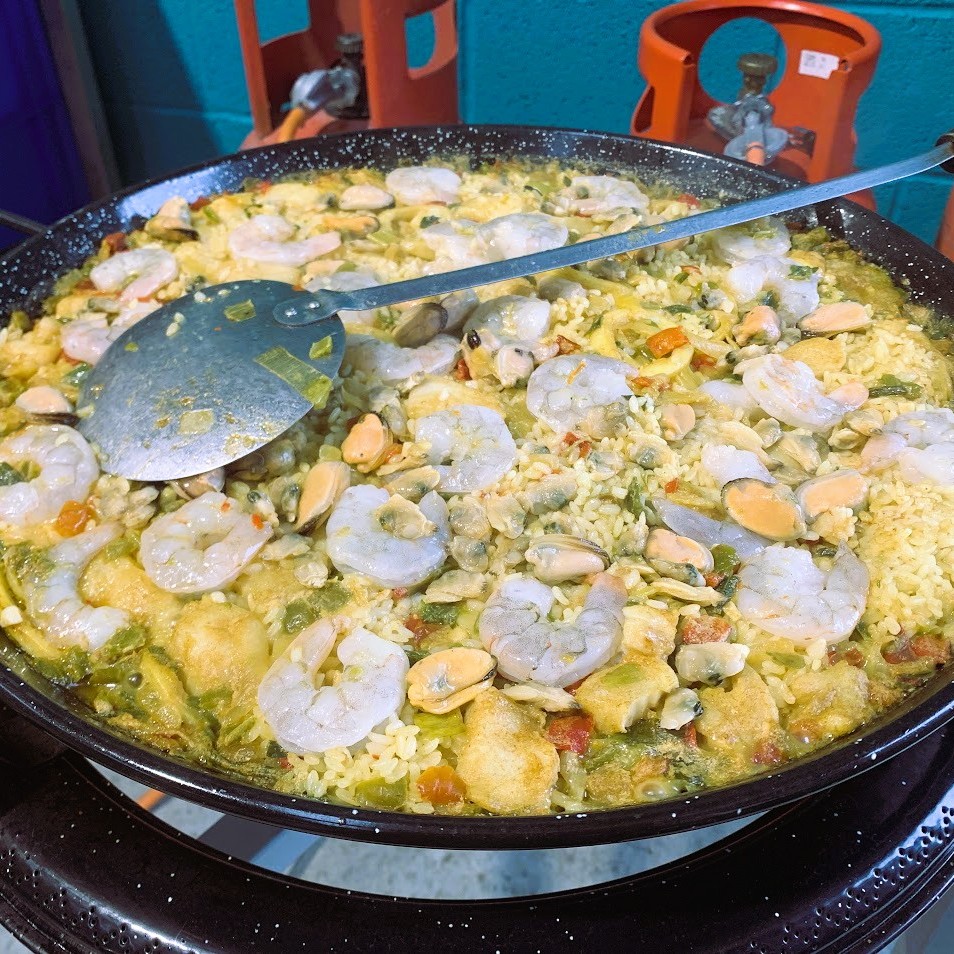
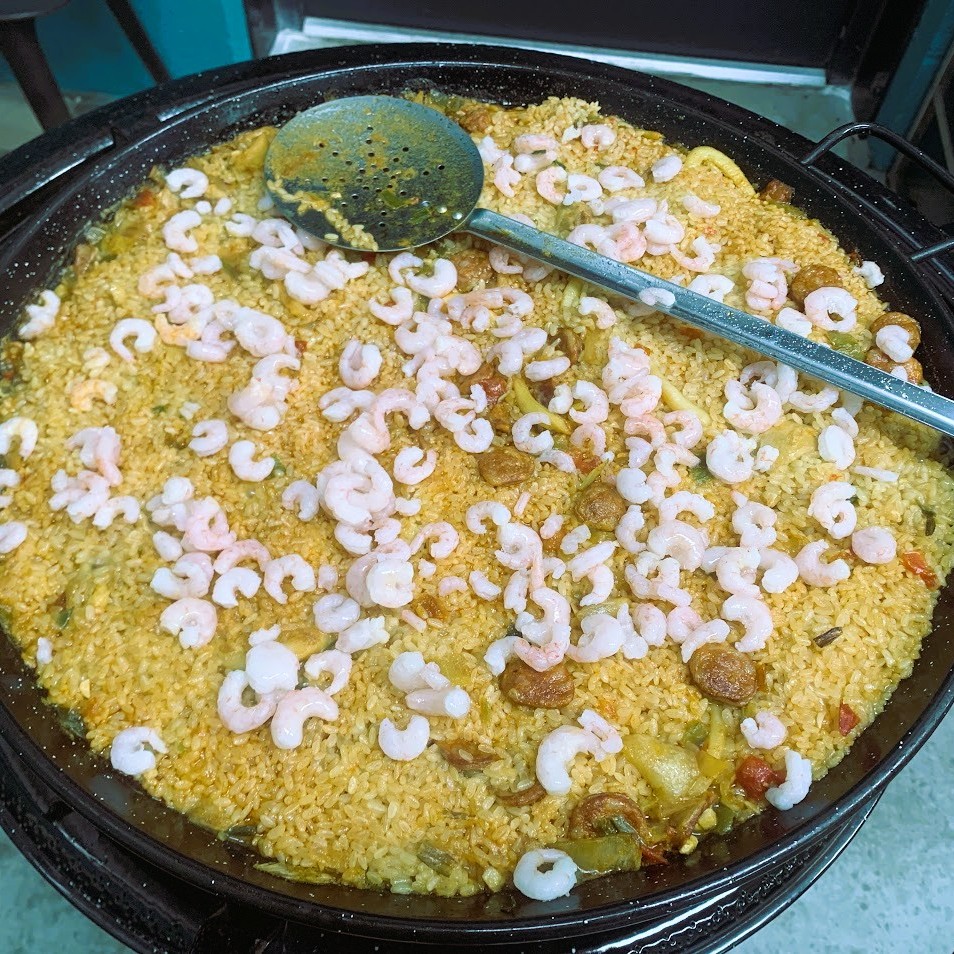
This is a no-nonsense set of paella-making kit for those who mean business when it comes to paella. The essential and high quality spice and rice ingredients and a choice of 8 differents enamel paella pans to suit your exact requirements. Each set comes with the following:
El Avion Spanish Saffron 380mg
El Avion Mild Paprika 75g and El Avion Smoked Paprika 75g (a choice of smoked mild or smoked hot – please make a note in the ‘Special Instructions’ on this post if you have a preference)
El Avion Dried Ñora Peppers 20g
El Avion Natural Paella Seasoning 9g (for those days when just want to be a bit lazy!)
La Campana Paella Rice 500g (for 30cm-34cm pans) or La Campana Paella Rice 1kg (for 38cm-46cm pans)
My Recipe ( which is also available online here)
Enamel Paella Pan: select the size and type of paella pan you require from the drop-down list (click on the links for more information about Enamel Paella Pans and Induction Enamel Paella Pans). The total price will be charged as follows:
30cm Pan – up to 4 servings – £27.99
34cm Pan – up to 6 servings – £30.99
38cm Pan – up to 8 servings – £34.99
42cm Pan – up to 10 servings – £37.99
46cm Pan – up to 12 servings – £42.99
30cm Induction Pan – £37.99
34cm Induction Pan – £42.99
38cm Induction Pan – £50.99
Paella is traditionally held to come from Valencia, which is where the speciality bomba rice thrives. And though Paella is a dish that every Spanish region will offer it’s own local spin on depending on the produce that it grows, farms or fishes there, there are the essential basics from specific regions that most Spaniards will insist on. The basics included here are produced by Valencian company Jose Maria Gomez Mira SA, who are highly respected for their century-old spice brand El Avion.
The best quality saffron is from Castilla La Mancha and is extracted from the Crocus Sativus flowers that have grown in abundance on the high plains around Toledo and Albecete for over 1000 years. Originally cultivated in Asia Minor, the flowers were brought over by the Arabs who prized saffron’s rare and delicate qualities as a dye, medicine and a spice.
The best crops of paprika (pimentón) are found in De La Vera in Northern Extremadura, where the soil, climate and precipitation are ideal for many varierties of the sweet bell peppers that have been cultivated since Christopher Columbus brought the first ones back from his second voyage to America. Peppers are harvested by hand in September and smoke-dried over slow-burning oakwood for about two weeks. The smoked peppers are then sent to a mill where the stalks and the unwanted part of the core is removed, and then ground by electronically operated stone wheels, with care taken not to overheat the powder and taint the pure flavour and colour.
Obviously these ingredients are put together for making Paellas, but the saffron and paprikas will be useful in many other dishes.
Smoked paprika is most famously used in chorizo and in specialities like Galician ’pulpo’, where it is sprinkled on octopus with extra virgin olive oil. In everyday cooking try with tomato-based sauces, soups and casseroles, and for a smoky twist sprinkle onto chicken before roasting or on cheese-on-toast before grilling.
Saffron should be used sparingly in soups especially if making in bulk as its pungency will increase after the first serving is made. It can also be used very effectively in cakes.
This luxury Andalucian Paella recipe involves a fair amount of work, mainly in the preparation, but the result is really worth the effort. It’s important to use the best quality ingredients because this recipe ensures that all of the flavours and aromas of the ingredients actually stay within the Paella, and continue to develop even after cooking. This recipe should take about an hour to complete.
Ingredients
1 kg clams or mussels
500g prawns
1 small chicken or rabbit
200g pork loin cut into cubes
75ml extra virgin olive oil
3 cloves garlic
1 bay leaf
1 dried ñora pepper (if available)
1 small onion, minced
2 green peppers cut into strips
300g squid cut into rings
2 large tomatoes
500g bomba rice
1.25 litres stock
10-12 strands saffron
10 peppercorns
½ tsp paprika (for meat paellas use 1-2 tsp)
salt (to taste)
100g cooked peas
1 small jar roasted red peppers
Prepare the fish, meat and stock
1.Clean clams & steam for 3 mins to open. Discard the free half-shell & set aside the remaining clams in the single shell. Strain & reserve the cooking water.
2.Cook prawns in their shells in a little water until they turn pink. Strain and reserve the liquid.
3.Cut the chicken into serving pieces, put the bony parts into hot water for stock for about 20 mins.
4.Combine all the liquids to make 1.25 litres stock, adding extra water if necessary.
Prepare the paella
5.In the paella pan, heat 50ml oil & brown the chicken & pork, turning often. Remove to a dish when nicely browned.
6.Add the onions & peppers to the paella pan, sauté for a few mins. Add in the garlic, the ñora pepper & bay leaf & sauté for 1 min.
7.Add the squid rings and continue to sauté.
8.Add the tomatoes & increase the heat so they start to ‘fry’ in the oil. Add the fried meat & remaining oil to prevent the mixture from sticking.
9.Add the rice & cook briefly, stirring until all the grains are coated and turn opaque.
10.Heat the stock if cooled & add to the rice, keeping the heat high.
Prepare and add the seasoning
11.In a mortar, crush the saffron with the salt, then add the peppercorns & continue to grind. Finally add the paprika & dilute mixture in a little of the paella liquid before adding to the pan. Stir in well.
Simmer and serve
12.Turn down the heat & allow the paella to simmer for about 20 minutes, until the rice tender but with a kernel of hardness in the centre.
13.Place reserved clams, prawns, peas and strips of pimientos on the surface of the dish for garnish.
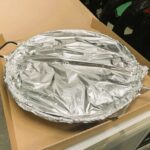
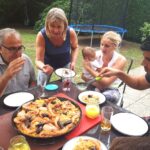
14.Give the pan a careful shake to prevent rice from sticking on the bottom before removing from heat. Cover pan with foil and let paella sit for 10 mins before serving. Serve direct from the pan with lemon quarters.
If you are short on time or ingredients, here are some variations:
oooooooooooooooooooooooooooo
Be the first to write a review